


In 2026, the travel industry has reached a definitive turning point. AI is no longer a “backend tool” powering booking engines or a simple chatbot answering FAQs. Instead, it has stepped into the spotlight as the ultimate VIP influencer. Shaping where people go, what they book, and which brands they trust.
Discovery no longer begins with ten open browser tabs and a mountain of conflicting reviews. Today, travellers can type in a single prompt and receive a curated itinerary within seconds. All the required information about transit, lodging, and hyper-personalised experiences are already mapped out. In this era of “agentic AI”, much of the noise has been filtered out upfront. This means the research phase is shorter, and the options a traveller sees are pre-selected before they even start comparing.
Because of this, hotels, attractions, and entertainment brands must recognise that AI has become the new VIP in travel marketing. It determines which brands are visible, how they are summarised, and whether they are recommended at all. To remain relevant, brands must learn how to position themselves effectively within this new layer of discovery.
How AI is influencing travel decisions
Nowadays, instead of scrolling through pages of results, travellers can receive instant, AI‑generated answers that sit above traditional listings. Search engines and travel platforms now use AI to surface summaries and itineraries before traditional results, so travellers often decide before clicking through.
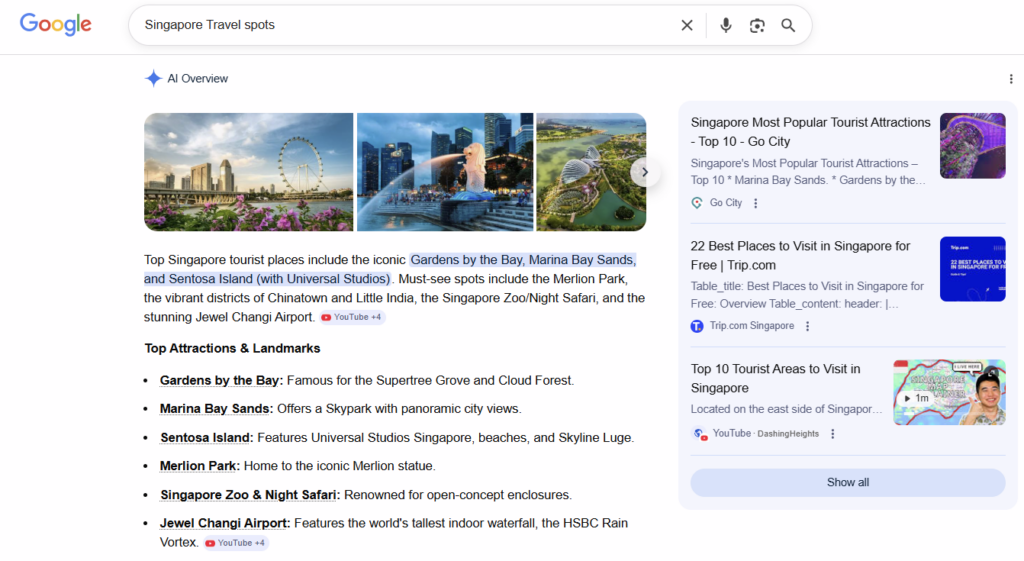
In the past, paid ads and well-optimised SEO pages dominated the results page. Brands competed through SEM, display campaigns, and painstaking keyword optimisation. Today, the battlefield is shifting toward Generative Engine Optimisation (GEO) and AI‑first platforms like Gemini and ChatGPT. The more credible, consistent, and machine‑readable your content appears to these systems, the higher your chance of being included in their recommendations.
As AI becomes more mainstream, many travellers have turned to AI to plan or book trips and to research destinations, local experiences, and restaurants. According to research published in the Global AI Sentiment Report by Booking.com, AI assistants are now considered a more trusted planning source than colleagues or influencers for travel decisions.
Travellers rely on AI for three main reasons:
- Speed – collapsing hours of research into seconds.
- Personalisation – tailoring suggestions to their preferences, budget, and intent.
- Convenience – reducing decision fatigue by narrowing a long list to a concise, curated shortlist.
How Travel Brands Should Position Themselves
AI is becoming a key channel in travel discovery. For travel brands, this means ensuring your content is both understandable to AI systems and recommendable to travellers. That requires rethinking your digital presence across three key areas for AI travel marketing.
Structured and clear content: AI prioritises information that is specific, consistent, and easy to interpret. Brands can organise pages with clear headings and concise answers. Provide accurate details about who the experience is for, what’s included, pricing, location, accessibility, and unique features. Use structured data (Schema markup) to make business information machine-readable. A hotel page that clearly states “family-friendly”, “near MRT”, or “late checkout available” gives AI stronger signals than lifestyle copy alone.
Digital authority and trust signals: AI systems look beyond your website to assess credibility. Brands should maintain a consistent presence across trusted platforms such as travel publications, blogs, OTAs, and review sites. Encourage steady, authentic reviews instead of chasing short-term rating spikes. Industry reports, collaborations, and case studies also help demonstrate reliability and expertise.
Conversational intent and natural language: AI assistants surface content that matches how travellers naturally speak. Structure FAQs around common questions, such as “What can I do near this attraction at night?” or “What are the best restaurants near the hotel?” Publish long-form guides and descriptive pages tailored to specific travel intents, like romantic weekends, family staycations, or wellness retreats. This helps AI understand context and summarise content into useful recommendations for travellers.
In an AI‑led discovery environment, visibility begins before the first click. Presenting information in ways AI can recognise, interpret, and summarise is what turns mere visibility into genuine consideration.
Strategic Support for AI-Optimised Travel Marketing
Success in an AI-driven travel landscape requires more than good content. It calls for a strategic approach that combines branding, SEO, structured data, and AI-optimised content. Expert guidance ensures a brand’s presence is recognised and recommended by AI systems.
This includes strengthening authority and digital signals through consistent reviews, credible mentions, and shareable content. Ongoing insights on AI trends help brands adapt as generative platforms evolve. Whether through GEO strategy, content audits, or predictive trend analysis, thoughtful guidance ensures a brand stays ahead where visibility is earned, not assumed.
With this foundation, travel brands can keep their main focus on delivering excellent guest experiences, while ensuring their digital presence is optimised for the AI systems shaping discovery. In a world where AI is the new VIP, having someone effectively “manage that relationship” becomes essential.
Looking Ahead
While travellers enjoy the benefits of speed and personalisation, brands face a new competitive frontier. Staying relevant now requires a strategic focus on machine-readable data, clear positioning, and conversational relevance. In this AI-led landscape, visibility is no longer a given; it is earned by providing the authoritative, structured information that these digital gatekeepers demand. Brands that rise to the challenge will secure recommendations, influence consideration, and maintain relevance in a world where AI shapes the journey from the very first search.