


Jordon Choo
You must have heard the word ‘generative’ going around for quite a while now. Whether you’re sick of the term or not, a side effect of all the craze going around it is that it has pretty much become part of the way of life for most users on the internet.

Whether it’s relying on a quick answer for that sudden question in your friend group or looking up a complicated medical term as you watch an episode of ‘The Pitt’, it’s no surprise that the average person would opt for convenience rather than dig for answers on a search engine these days.
But one might ask how that works. How does your preferred AI platform choose its sources? Is it random? Well… that process is known as GEO.
What is GEO, exactly?
GEO, or as those very much into tech would call in full as ‘Generative Engine Optimisation’, is the process of optimising your content for AI-powered search engines to pick up. This means improving your piece of content’s searchability so that tools like CoPilot, Gemini, Claude or ChatGPT can pick it up with ease when combing through the web for the user’s questions on their platforms.
Okay, but why should I care about GEO?
While SEO has been a dominant force in helping marketers gain organic volume and traffic for whatever they’re promoting through search engines, it’s estimated that now at least 80% of consumers rely on AI-written results for 40% of their searches. The result? Organic web traffic has now fallen by at least 15% to 25%.
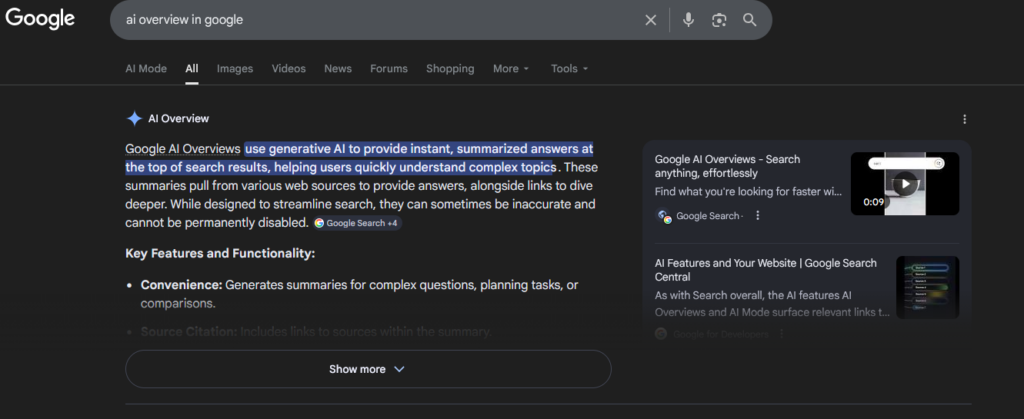
This means lesser people are going to websites to look for answers to their questions now. Why would they when AI does all the work for them? Not only that, the AI summary answer usually appears at the top of every result too, which means they’re even less likely to scroll down if they deem it satisfactory enough. Even if you rank positive in search engine results through traditional SEO, there’s still a chance that some potential customers might never discover you.
How do I optimise for good GEO then?

Jamming keywords into your articles no longer work. Instead, framing sentences in a conversational manner in a way that an average person would ask a question helps much more within your content. For example, in the past, we would jam ‘best trends to jump onto 2026’ into our articles in hopes that SEO would put our articles first whenever someone searched for the term. But if you want good GEO, it’s instead better to include a question such as ‘What are the best trends I can jump onto in 2026’.
Next, make sure you pay attention to how your content flows. If you haven’t been using your H1s, H2s and H3s… now’s the time. AI-powered search engines love hierarchy, and much like a human, prefer it when content is easily digestible and readable. Use bullet points, create pros and cons tables and create summary boxes if need be.
When writing, you should cite your sources too. Your content is more likely to be picked up by AI if it’s reputable, as with so much misinformation floating around the web these days, being accurate and factual can be a massive boon to your GEO efforts, as well as for your brand too.
Lastly, be direct. Don’t fluff up your piece of content with jargon. Ditch those 2000 word articles. Get straight to the point. Extremely long articles don’t work for GEO, so the less you say but while being informative helps a lot.
So, in summary:
- Don’t jam keywords into content. Ask questions like how a human would
- Utilise your H1, H2 and H3 tags for better hierarchy
- Cite your sources
- Be direct and don’t write walls of text
How does GEO help my SEO?
As consumer habits change with how they find answers online, it makes a lot of sense that incorporating GEO into your digital strategy can boost how your content is seen even more. When AI surfaces your content in their results, it helps to create even more visibility and credibility for your brand. After all, if you weren’t trustworthy, would a supercomputer serve you as an answer to all the viewer’s woes? Probably not.

Not only that, by building your content to be GEO-friendly, you help readers too! Now your content is structured in a way that helps both robots and humans too. For example: summaries. AI-powered search engines love a good summary, and for traditional SEO, a summary with keywords usually gets you ranking high. I’d say that’s a win-win.
And of course, you’ll also enjoy increased traffic and reach too, thanks to both GEO and SEO surfacing your content up to new audiences.
But what are the risks with GEO?
It can’t all be sunshine and rainbows, right? You’d be correct. By optimising your content to be AI-friendly, there’s a chance that tailoring it to be overtly GEO-friendly can lead to things such as…
- Loss of brand voice: AI platforms will not preserve this when creating summaries, as it’s job is to find the best answers as quickly as possible
- Risk of misinformation: If you accidentally make a false claim, it might contribute to the continued distrust of AI. And if your brand is caught in the crossfire? That could be a big mess to clean up
- Constantly changing AI models: As AI models improve, the algorithms that they pick up answers are also ever-changing too. While you might show up on AI platforms for a time, there is no guarantee you’ll stay there forever
- Big brand bias: GEO tends to favour authoritative sources, which means the biggest brands will tend to outrank smaller brands. You should assess if it’s worth it to commit to GEO if you’re not a big brand
- Lack of authenticity in content: Tailoring your content solely for GEO might make all of your content sound like something from a content mill, and with how people are willing to label anything AI-generated as ‘slop’ these days, you should be on your toes when it comes to this
- Too many lists: This sounds familiar… and trust me, this is a pretty obvious, telltale sign that something might be written with AI usually
In summary…
GEO can be very useful for your digital content strategy still if you are very aware of both the pros and cons that come with it. Since everyone’s turning to AI these days, it makes the most sense that you would optimise for it.
But it’s important not to lose your brand’s entire humanity in the hopes of pleasing machines. At the end of the day, a good balance is needed to ensure your brand retains its authenticity while being AI-friendly too.